The Minibus: 9 to 16 Passengers with a Driver
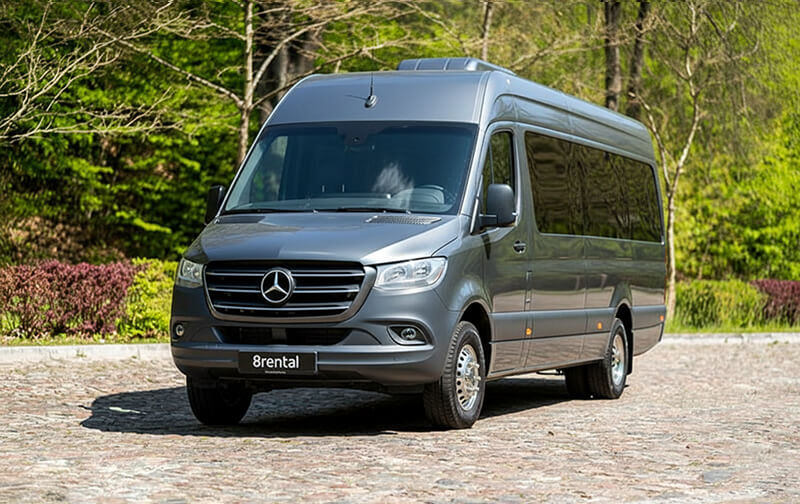
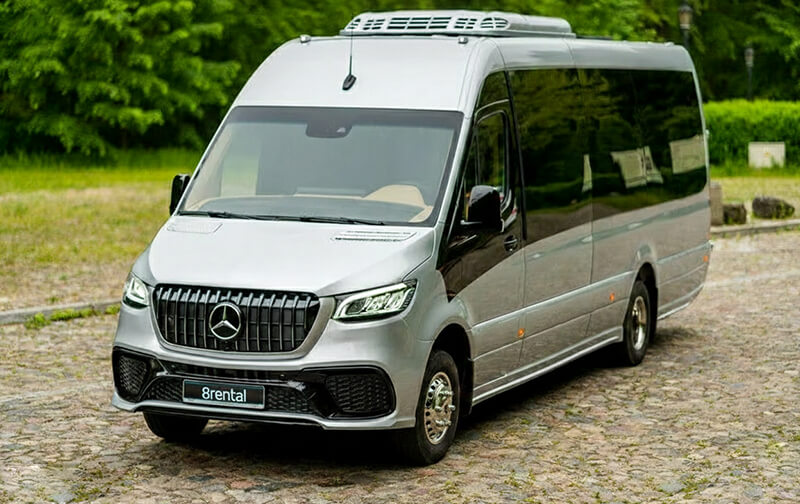
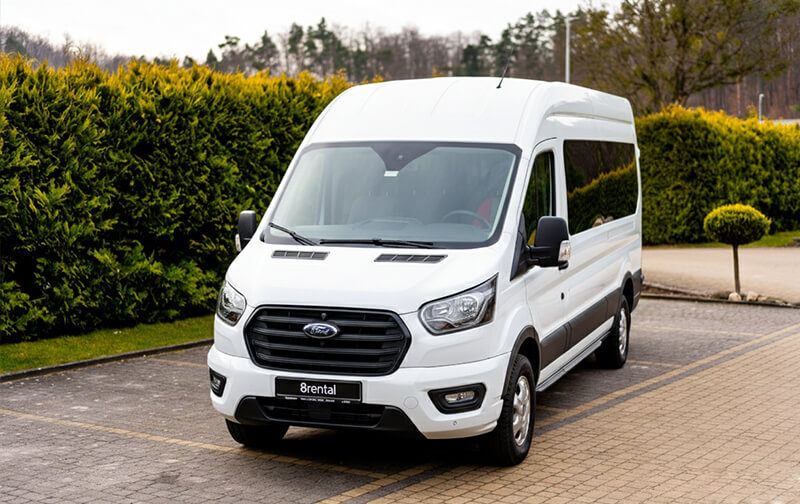
When a group is too big for a car and too small to fill a coach, the minibus takes over. It seats 9 to 16 passengers plus the driver and is easier on narrow roads.
What Swiss law calls it
Swiss law sorts passenger vehicles by seats and weight. Ten seats or more, counting the driver's, and no more than 3.5 t makes a Kleinbus. Over 3.5 t, the same vehicle is a Gesellschaftswagen, legally the same family as a coach. That decides the road charge: up to 3.5 t it carries the motorway vignette, above that it pays the PSVA.
The driver holds subcategory D1, is at least 21 and has the CZV certificate. On domestic trips, professional drivers of vehicles with up to 16 seats besides the driver work under ARV 2 rather than ARV 1. The operator holds the BAV admission needed for carrying more than eight passengers.
Seats and bags
- Seats: 9-16 passengers plus the driver
- Luggage: Rear luggage space; limited when every seat is taken
On board, and the rules that apply
- Subcategory D1 covers passenger vehicles with more than eight but not more than 16 seats besides the driver (Art. 3 Abs. 2 VZV); the minimum age is 21 (Art. 6 Abs. 1 Bst. e VZV), and professional drivers need the CZV certificate (Art. 2 Abs. 1 CZV)
- Swiss law calls a passenger vehicle with more than nine seats including the driver a Kleinbus if it weighs up to 3.5 t, and a Gesellschaftswagen if it weighs more (Art. 11 Abs. 2 Bst. c and d VTS)
- A minibus up to 3.5 t needs the motorway vignette (sticker or e-vignette); a minibus over 3.5 t pays the flat-rate heavy vehicle fee (PSVA) instead (Art. 3 NSAG; Art. 1 and 3 SVAV)
- In domestic traffic, drivers who use passenger vehicles with no more than 16 seats besides the driver for professional passenger transport come under ARV 2 instead of ARV 1 (Art. 4 Abs. 2bis ARV 1)
- Children under 12 need a suitable child restraint on seats with seat belts unless they are at least 150 cm tall; on seats with lap belts only, children from 7 years need none (Art. 3a Abs. 4 VRV)
- Commercial passenger transport with more than eight passengers besides the driver needs the BAV admission as a road transport undertaking (Art. 3 Abs. 1bis Bst. a STUG)
Children on board
Pupils below 12 years and 150 cm ride in a child seat or booster wherever the seat has a belt. Seats with only a lap belt are the exception: from age 7 no booster is needed there. For a younger class, say how many pupils need a booster seat, so they are fitted before departure.
Stopping in town
Town coach rules often turn on the seat count. Luzern is the clearest case. A Kleinbus of ten seats and up is treated as a coach at the central stops and books the same voucher. Smaller vans are kept out of those stops entirely.
What organisers ask us
How much luggage fits in a minibus?
There is rear space, but with every seat taken it is limited. For 16 people with large cases, choose a midi-coach or add a second vehicle.
Is a minibus right for a sports team?
Often. A squad of 14 with two staff fits, and kit bags go in the back if they are not too many.
Can a minibus reach a car-free resort?
No vehicle can. It stops where a coach stops: Täsch for Zermatt, Lauterbrunnen for Wengen.
More group trips by coach
- Coaches with a Driver for Company Events
- Ski Transfers by Coach: Resorts, Passes and Car Trains
- Coaches for the Schulreise and the Klassenlager
- Coach Hire for Teams, Clubs and Supporters
- Wedding Transport: Coaches for Guests, a Car for the Couple
- Day Trips by Coach: Passes, Lakes and Panoramic Trains
- Cruise Transfers: Rhine Ships at Basel and the Lake Piers
- Accessible Group Travel with a Driver